
Built for Where AI Actually Operates.
AI has advanced. The infrastructure beneath it must catch up. INTEPO brings an integrated, ruggedized physical foundation to the places where intelligence must operate—cell towers, streets, utilities, industrial sites and remote locations.
The application can change. The accelerator can change. The infrastructure architecture remains.
INTEPO’s architecture is designed to accommodate evolving applications and compute technologies while maintaining local governance over power, communications, workloads and physical operating conditions. Governance embedded inside keeps infrastructure aligned with mission priorities as technology and field conditions change.
Infrastructure that finally catches up to AI—and then stays ahead of it.
The next industrial revolution does not only require more intelligence. It requires infrastructure capable of governing that intelligence in the physical world.
The missing layer is governance embedded in hardware.
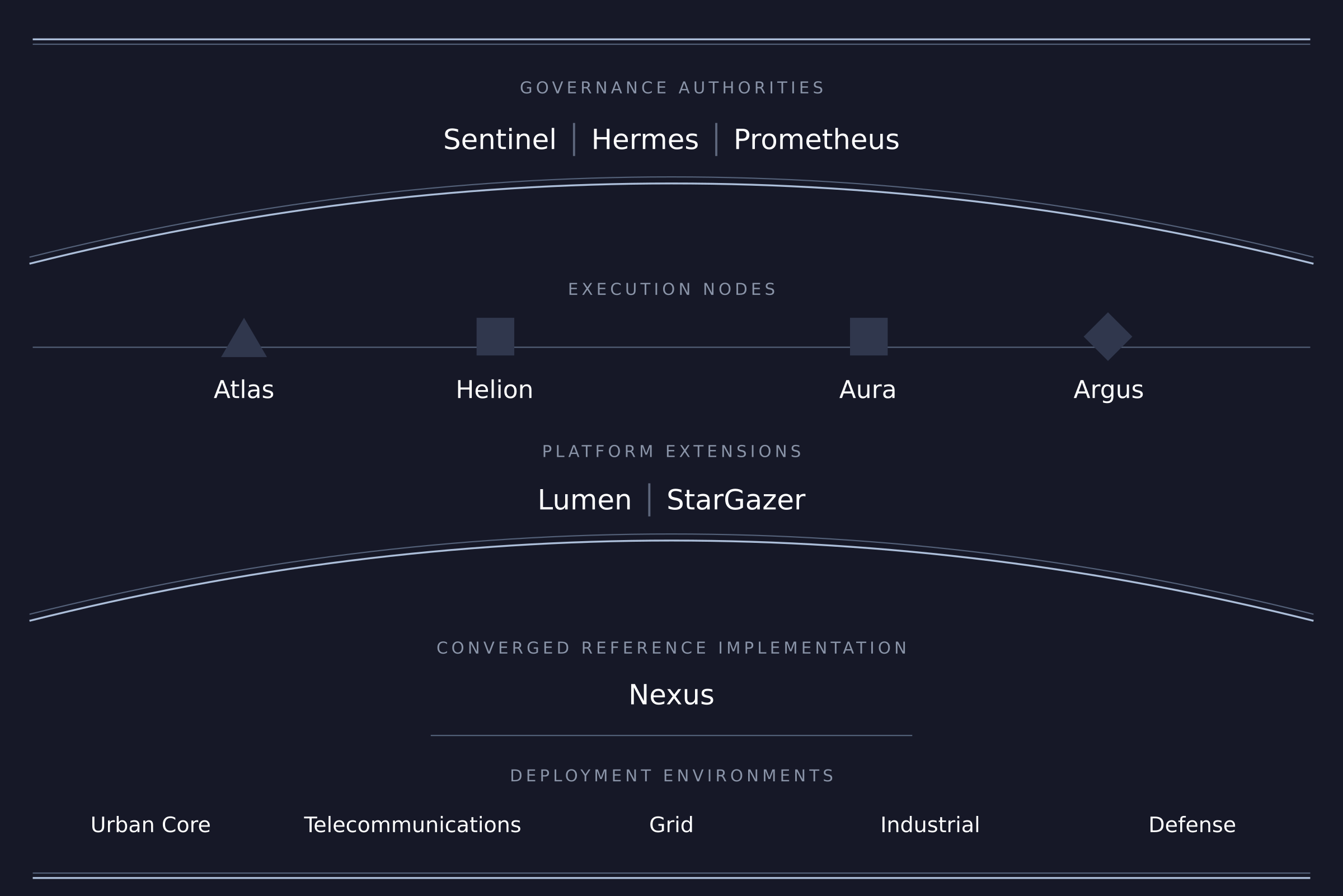
INTEPO infrastructure operates through a distributed set of governed execution nodes that integrate deterministic power management, authenticated communications, and operational control within sealed infrastructure devices. These nodes provide the operational foundation through which sensing, communications, and mission capabilities are delivered within the governance domain established by Sentinel and Hermes.
INTEPO execution nodes are engineered for deployment in demanding operational environments where conventional networking and computing equipment cannot operate reliably. INTEPO edge hardware is hermetically configured (IP68) with convection-cooled architectures ensuring reliable operation in uncontrolled environments where failure is unacceptable.
Each INTEPO node functions as a fully integrated infrastructure platform combining power management, communications systems, and governance, allowing autonomous operation without dependence on centralized infrastructure. Under Sentinel governance, INTEPO infrastructure is engineered to degrade deterministically under disruption rather than fail unpredictably. When instability occurs, controlled degradation reserves functionality until conditions stabilize. During normal operation, nodes continuously monitor and maintain emergency cell power reserves to sustain infrastructure continuity.
Hermes governance embedded within each node ensures that communications and command exchange remain authenticated and verifiable across distributed deployments. Together, these characteristics allow infrastructure nodes to operate as self-governing operational elements capable of sustaining communications, sensing, and mission capability in environments where conventional edge systems would experience uncontrolled failure.
INTEPO infrastructure is engineered not to fail, but to remain governed, resilient, and operational when failure conditions emerge.
Execution Nodes
INTEPO execution nodes combine intelligent power, networking, wired and wireless communications, and local inference capability in compact field infrastructure. Atlas, Helion, Aura and Argus provide distinct infrastructure functions within the governance framework established by Sentinel, Hermes and Prometheus.framework. Nodes exchange operational information and coordinate through Nexus while retaining local authority over their resources and permitted actions.
Atlas
Wired Infrastructure
Helion
Solar Infrastructure
Aura
Wind Infrastructure
Argus
Perception Infrastructure
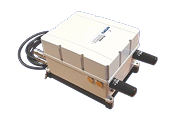
Atlas
Atlas combines governed power, networking, wired and wireless communications, and local inference capability for demanding field deployments.
Reference configurations are designed to accommodate global VAC and wide-range 12-60 VDC inputs, enabling deployment across commercial, industrial, transportation and critical infrastructure environments.
Atlas can support fixed, mobile and transportable deployments where resilient communications, power and operational capability must remain available with the mission.
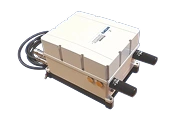
Helion
Helion provides solar-integrated infrastructure capability for deployments requiring sustained operation where conventional power may be unavailable, unreliable or impractical.
Reference configurations combine solar-energy input, governed energy storage and power management to support communications, sensing and distributed operational equipment.
Helion combines solar-powered infrastructure with networking, wired and wireless communications, and local inference capability within the INTEPO governance framework.
Aura
Aura provides wind-integrated infrastructure capability for deployments requiring sustained operation in remote, exposed or infrastructure-limited environments.
Reference configurations combine wind-energy input, governed energy storage and power management to support communications, sensing and distributed operational equipment.
Aura combines wind-powered infrastructure with networking, wired and wireless communications, and local inference capability within the INTEPO governance framework.
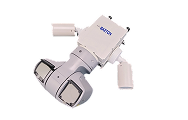
Argus
Argus combines sensing and observation with networking, wired and wireless communications, and local inference capability for demanding physical environments.
Reference configurations may support multiple power sources and sensing packages selected for the requirements of the deployment.
Operating within the authority framework established by Sentinel, Hermes and Prometheus, Argus enables perception workloads to remain governed according to available power, communications, environmental conditions and mission priorities.
Platform Extensions
Platform Extensions expand the capabilities of INTEPO infrastructure without changing the underlying governance architecture. Integrated with execution or converged nodes according to deployment requirements, each extension operates within the framework established by Sentinel, Hermes and Prometheus.
INTEPO Lumen — Governed Lighting
INTEPO Lumen provides infrastructure-integrated lighting for demanding and disrupted operating environments.
Lumen enables lighting output to be governed according to available power, environmental conditions and operational priorities. During reduced-power conditions, reference configurations may support staged dimming and other controlled responses that preserve essential visibility while extending infrastructure endurance.
Operating within the INTEPO authority framework, Lumen transforms lighting from an unmanaged electrical load into a governed infrastructure capability.
INTEPO StarGazer — Satellite Communications
StarGazer is a planned satellite communications extension designed to provide resilient connectivity for INTEPO infrastructure operating in remote, disconnected or infrastructure-degraded environments.
Through compatible low-Earth-orbit satellite networks, StarGazer is intended to provide an alternative communications path when terrestrial connectivity is unavailable, impaired or impractical.
Operating within the INTEPO authority framework, StarGazer may support remote monitoring, public safety, industrial operations, emergency response, defense and other distributed deployments requiring communications continuity.
Nexus Converged Infrastructure
Nexus — Converged Reference Implementation
Nexus is INTEPO’s converged reference implementation, designed to bring intelligent power, networking, wired and wireless communications, inference and storage into a governed field platform for critical infrastructure applications.
Nexus is advancing through reference architecture, engineering specification and prototype development toward an integrated validation platform.
Nexus embodies the INTEPO governance architecture within a converged infrastructure node. Sentinel governs power availability, energy continuity and physical operating state. Hermes provides authenticated command, communications and operational truth. Prometheus governs mission priorities, applications and workload execution.
Within this governed domain, Nexus is designed to integrate intelligent power, communications, computing and storage within a governed field platform. Reference configurations support deployment-specific applications across demanding critical infrastructure environments.
Reference configurations are being developed for demanding physical environments and may incorporate sealed enclosure construction, passive thermal management, multiple power inputs, governed energy storage and resilient communications.
Nexus is intended to support locally governed operation when power, connectivity or centralized control becomes unstable, impaired or unavailable. Its modular architecture will enable configurations appropriate to Urban Core, telecommunications, grid, industrial and defense environments.
As INTEPO’s converged reference implementation, Nexus will provide the engineering and validation foundation for partner-specific configurations, certified implementations and commercial licensing packages.
Prometheus — Mission and Workload Governance
Prometheus is the INTEPO Governance Authority responsible for mission priorities, applications and workload execution.
Prometheus
Operating in coordination with Sentinel and Hermes, Prometheus governs how mission workloads use the capabilities available within an INTEPO governed domain.
Prometheus enables applications, analytics and distributed inferencing workloads to operate according to defined mission priorities and the available power, communications and physical operating state of the infrastructure.
Within Nexus and other compatible implementations, Prometheus provides the architectural foundation for governed workload orchestration, conservation profiles and bounded operation through changing or degraded conditions.
Prometheus does not replace Sentinel or Hermes. Each authority retains a distinct governance responsibility while contributing to coordinated operation across the physical infrastructure domain.
Platform Development and Licensing
INTEPO is developing its expanded infrastructure platform for implementation through manufacturers and system integrators under license. Implementation packages are intended to include reference designs, engineering specifications, software interfaces and validation requirements, with commercial rights defined by the applicable license agreement.
The expanded platform is targeted for launch in late 2027, building on INTEPO’s deployed engineering experience and patented and patent-pending technologies.