
Autonomous Infrastructure Operation
INTEPO infrastructure operates through a distributed set of governed execution nodes that integrate deterministic power management, authenticated communications, and operational control within sealed infrastructure devices. These nodes provide the operational foundation through which sensing, communications, and mission capabilities are delivered within the governance domain established by Sentinel and Hermes.
Nodes are engineered for deployment in demanding operational environments where conventional networking or computing equipment cannot operate reliably. Sealed enclosures support IP68 or hermetic configurations for outdoor, industrial, and exposed infrastructure installations. Convection-cooled architectures eliminate external fans or moving parts, ensuring reliable operation in uncontrolled environments where maintenance access may be limited.
Each INTEPO node functions as a fully integrated infrastructure system combining power management, communications systems, and governance, allowing autonomous operation without dependence on centralized infrastructure. Under Sentinel governance, nodes maintain deterministic power continuity and transition through controlled degradation states when instability occurs, preserving critical functionality until conditions stabilize. During normal operation, nodes continuously maintain emergency cell power reserves to sustain infrastructure continuity.
Hermes governance embedded within each node ensures that communications and command exchange remain authenticated and verifiable across distributed deployments. Together, these characteristics allow infrastructure nodes to operate as self-governing operational elements capable of sustaining communications, sensing, and mission capability in environments where conventional edge systems would experience uncontrolled failure.
INTEPO infrastructure is engineered not to fail, but to remain governed, resilient, and operational when failure conditions emerge.
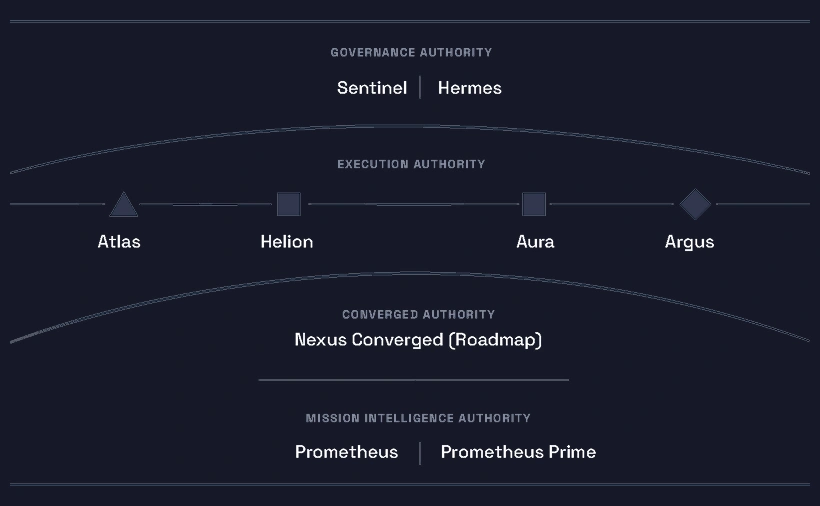
Execution Authority Nodes
Four execution nodes provide infrastructure capability across diverse deployment environments.
INTEPO execution nodes are engineered as resilient infrastructure devices designed for deployment in demanding operational environments where conventional edge equipment cannot operate reliably.
Each node is built as a fully integrated infrastructure system combining deterministic power management, governed communications, and operational control within a single sealed device. Enclosures are designed for IP68 or hermetically sealed deployment, enabling operation in outdoor, industrial, and exposed infrastructure environments.
Nodes operate acrossw ide environmental temperature ranges and utilize convection-cooled architectures with no external fans or moving parts, ensuring reliable operation in locations where maintenance access may be limited.
All electronics required for infrastructure operation are integrated within the device, including power management, communications, and governance controls. The systems operate autonomously and are capable of maintaining operational state without dependence on centralized infrastructure.
Through Sentinel governance, execution nodes maintain deterministic power continuity and coordinate operational behavior under changing environmental or infrastructure conditions. When instability occurs, nodes transition through controlled degradation states, preserving critical functionality and enabling deterministic recovery as conditions stabilize.
Hermes governance is embedded within each execution node, ensuring that communications and command exchange remain authenticated and verifiable across distributed infrastructure deployments.
These characteristics allow INTEPO execution nodes to operate as self-governing infrastructure elements, capable of sustaining communications, sensing, and operational capability in environments where conventional networking and computing equipment would experience uncontrolled failure.
This architecture reflects years of hardware and firmware development focused on resilient edge infrastructure — systems designed not simply to function under ideal conditions, but to remain operational when infrastructure itself becomes unstable.
INTEPO infrastructure is engineered not to fail, but to remain governed, resilient, and operational when failure conditions emerge.
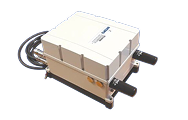
Atlas
Operates within AC/DC environments for fixed
and managed deployments.
Helion
Enables solar-integrated autonomous deployment.
Aura
Enables wind-integrated sustained operation.
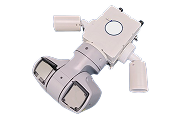
Argus
Integrates perception systems within governed operational boundaries.
Atlas Authority
Atlas provides infrastructure-grade wired communications and deterministic power distribution for deployed systems.
The node supports global VAC input and a wide VDC input range of 20–160 VDC, allowing direct integration into commercial, industrial, and infrastructure power environments. Atlas functions as a resilient communications backbone within governed infrastructure deployments.
Helion Authority
Helion provides energy-integrated infrastructure capability for deployments requiring sustained autonomous operation.
The node accepts 48 VDC solar input with integrated MPPT controllers that regulate solar energy directly within the device, maintaining stable infrastructure power for communications and sensing systems in remote environments
Aura Authority
Aura provides wireless infrastructure capability for distributed deployments where wired connectivity may be limited or unavailable.
The node operates with 48 VDC wind power input and integrated MPPT controllers that regulate wind-generated energy to maintain stable infrastructure operation in exposed environments.
Argus Authority
Argus provides perception infrastructure capability through integrated sensing and observation systems.
The node supports multiple infrastructure power configurations including VAC, wide-range VDC, solar, or wind, enabling sensing capability across diverse operational environments.
Nexus Converged Authority
Nexus converges execution infrastructure and mission intelligence within a single governed operational boundary.
Execution nodes deliver resilient infrastructure capability across distributed environments. Nexus brings these capabilities together within a unified operational node where communications, sensing systems, and intelligence execution operate in coordination.
Nexus maintains the same infrastructure characteristics as execution nodes, including sealed enclosure design, wide environmental operating ranges, and autonomous operation. Power originating from execution infrastructure nodes becomes available within the Nexus environment, enabling integrated operation of communications systems, sensing platforms, and mission intelligence processing.
Mission intelligence capabilities, including Prometheus and Prometheus Hybrid, execute directly within the Nexus environment, operating under the governance of Sentinel and Hermes.
Through this convergence, Nexus enables the deployment of distributed intelligence infrastructure operating within a single governance domain across any environment.
Prometheus
Prometheus provides mission intelligence capability operating within the Nexus converged infrastructure environment.
Analytical processing and mission applications execute at the edge while remaining governed by Sentinel and Hermes authorities. By executing intelligence directly within Nexus, Prometheus enables sensing systems, communications networks, and operational platforms to operate with real-time analytical capability without dependence on external computing environments.
Prometheus Hybrid
Prometheus Hybrid integrates mission intelligence capability directly within the Nexus converged infrastructure environment, allowing sensing systems, communications infrastructure, and analytical processing to operate together within the same governed system.
This configuration enables distributed infrastructure deployments to operate with embedded analytical capability while remaining within the Sentinel and Hermes governance domain